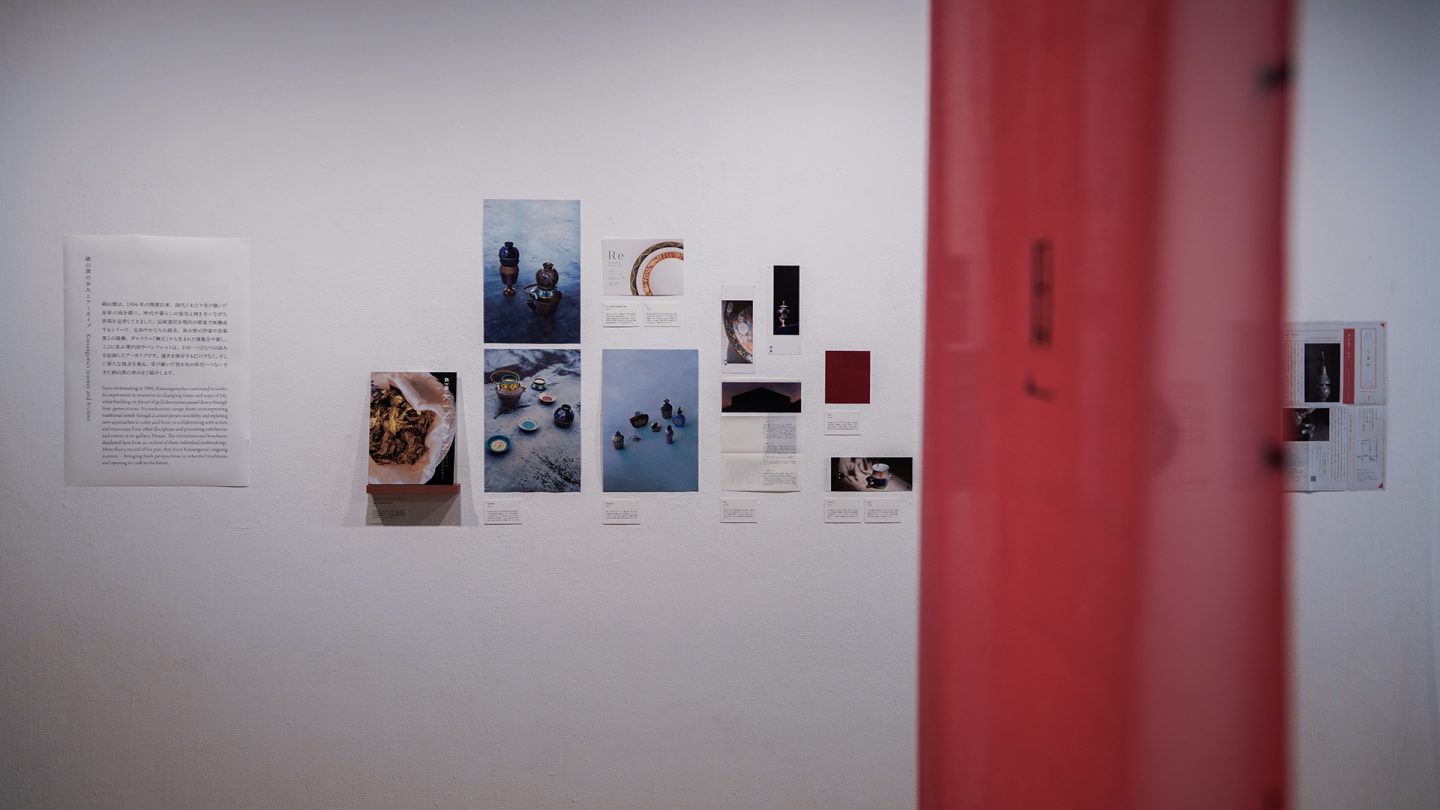
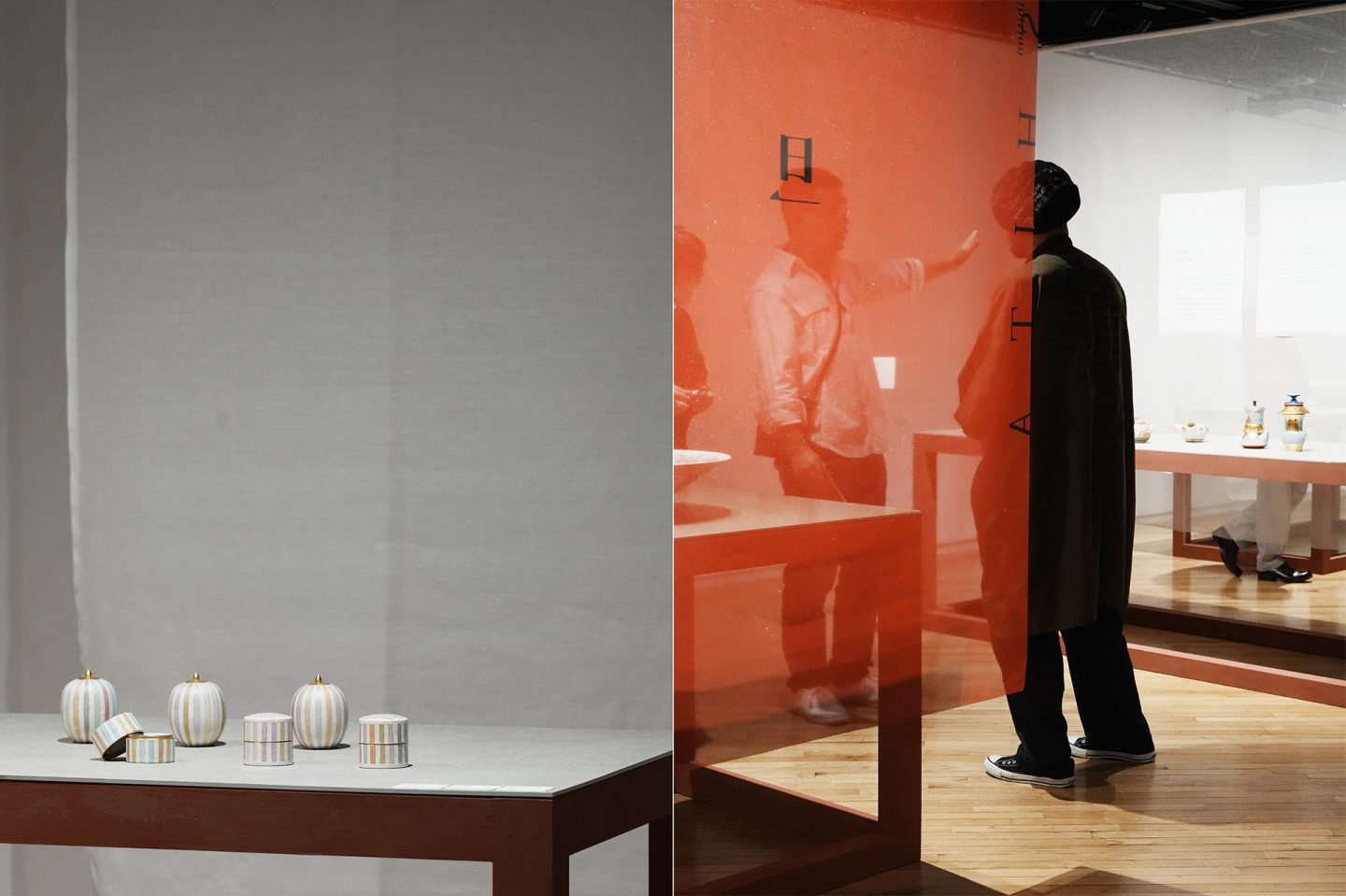
九谷焼の窯元・錦山窯の四代目当主・吉田幸央氏の仕事と次の100年への展望を紹介する企画展。その会場構成を担当した。
A special exhibition showcasing the work of Mr Yukio Yoshida, the fourth-generation head of the Kutani-yaki pottery studio Kinzan-gama, and his vision for the next 100 years. Atelier matic was responsible for the exhibition design.
錦山窯は1906年、石川県小松市で創業。九谷焼の上絵付を専門とし、代々金を用いた絵付を特徴としてきた。三代目の吉田美統は、金箔や金粉を用いて文様を施す「釉裏金彩」の技法を極め、重要無形文化財保持者(人間国宝)に認定された。現在の当主である吉田幸央は、その技法を継承しながら、現代の感性を取り入れた新たな金彩表現を追求している窯元である。
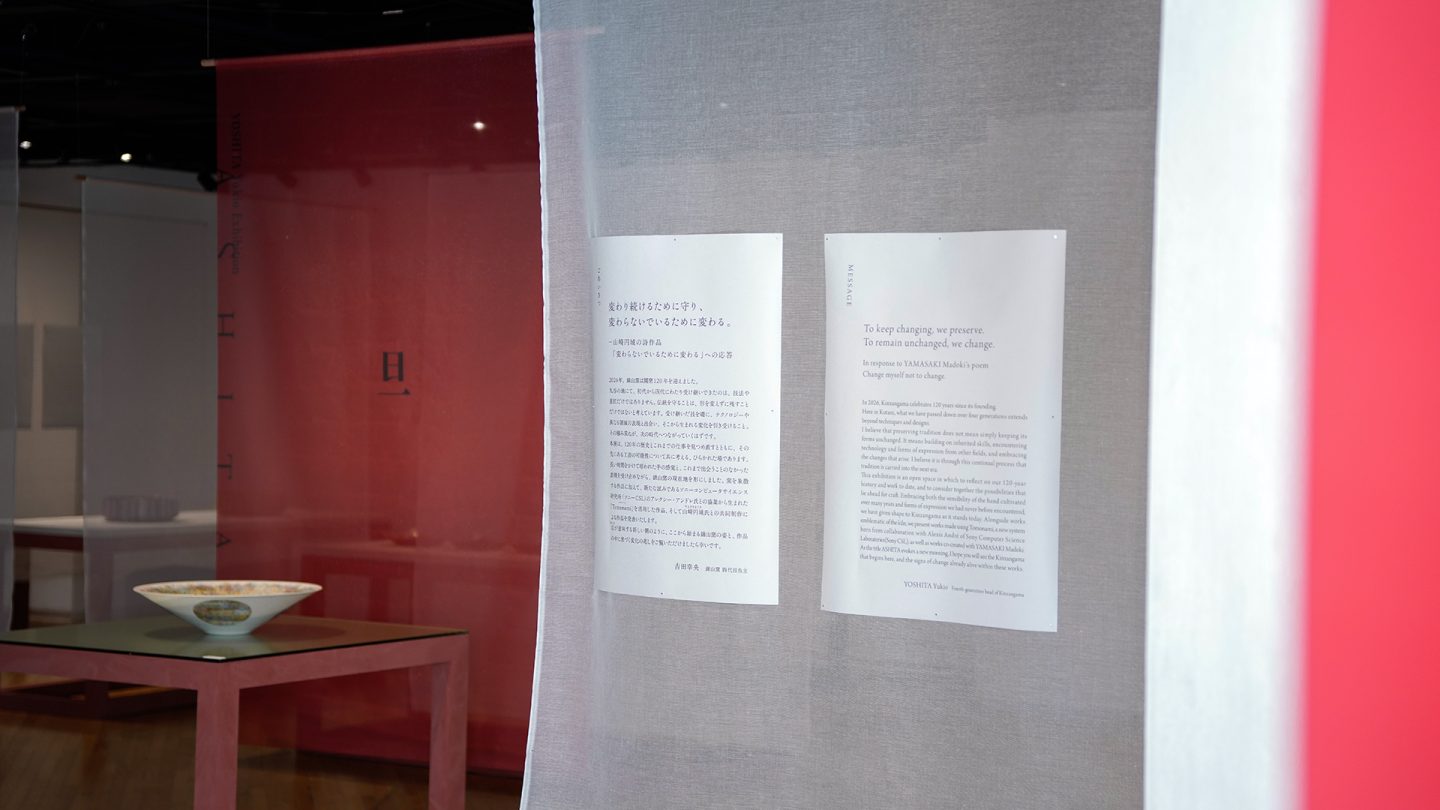
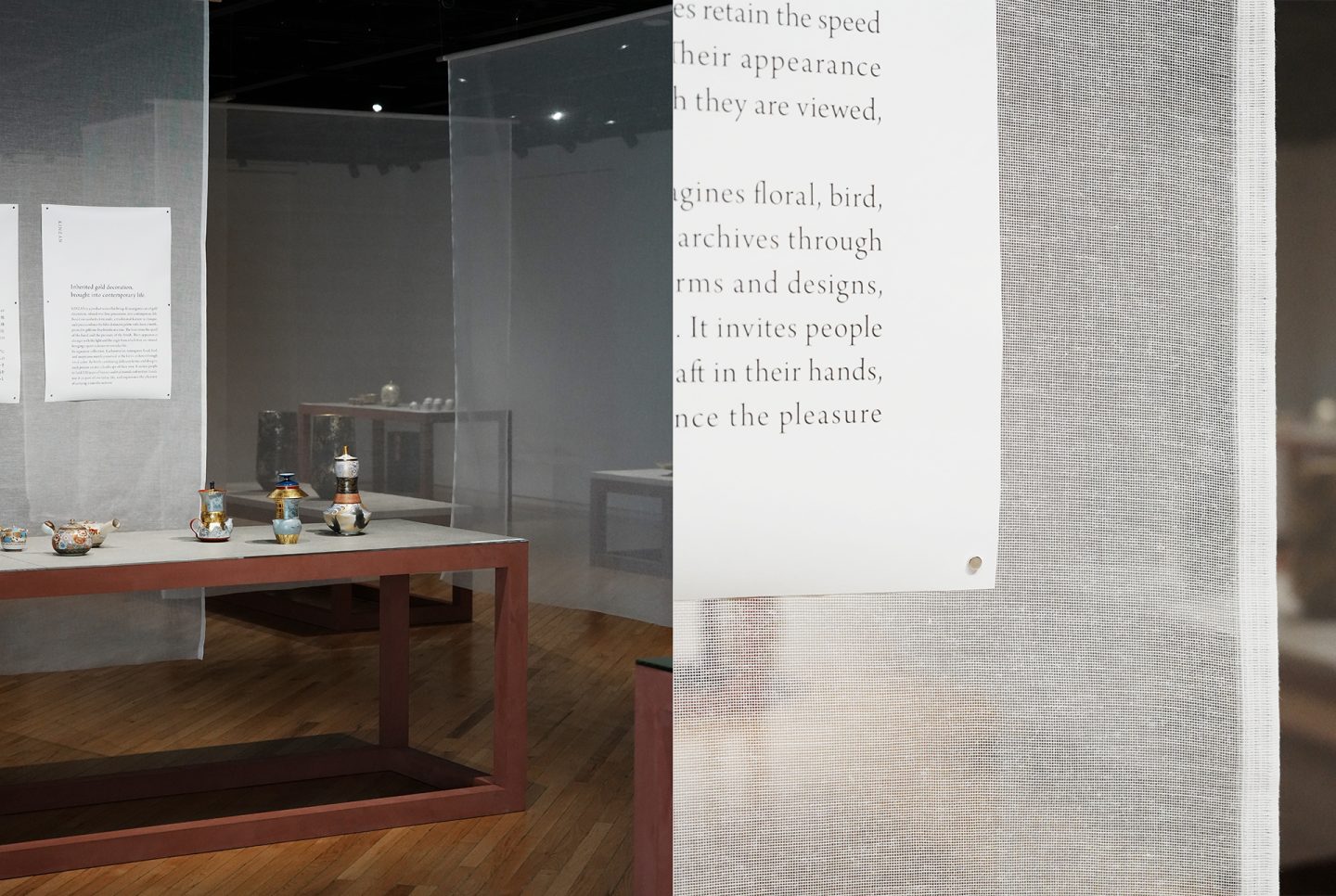
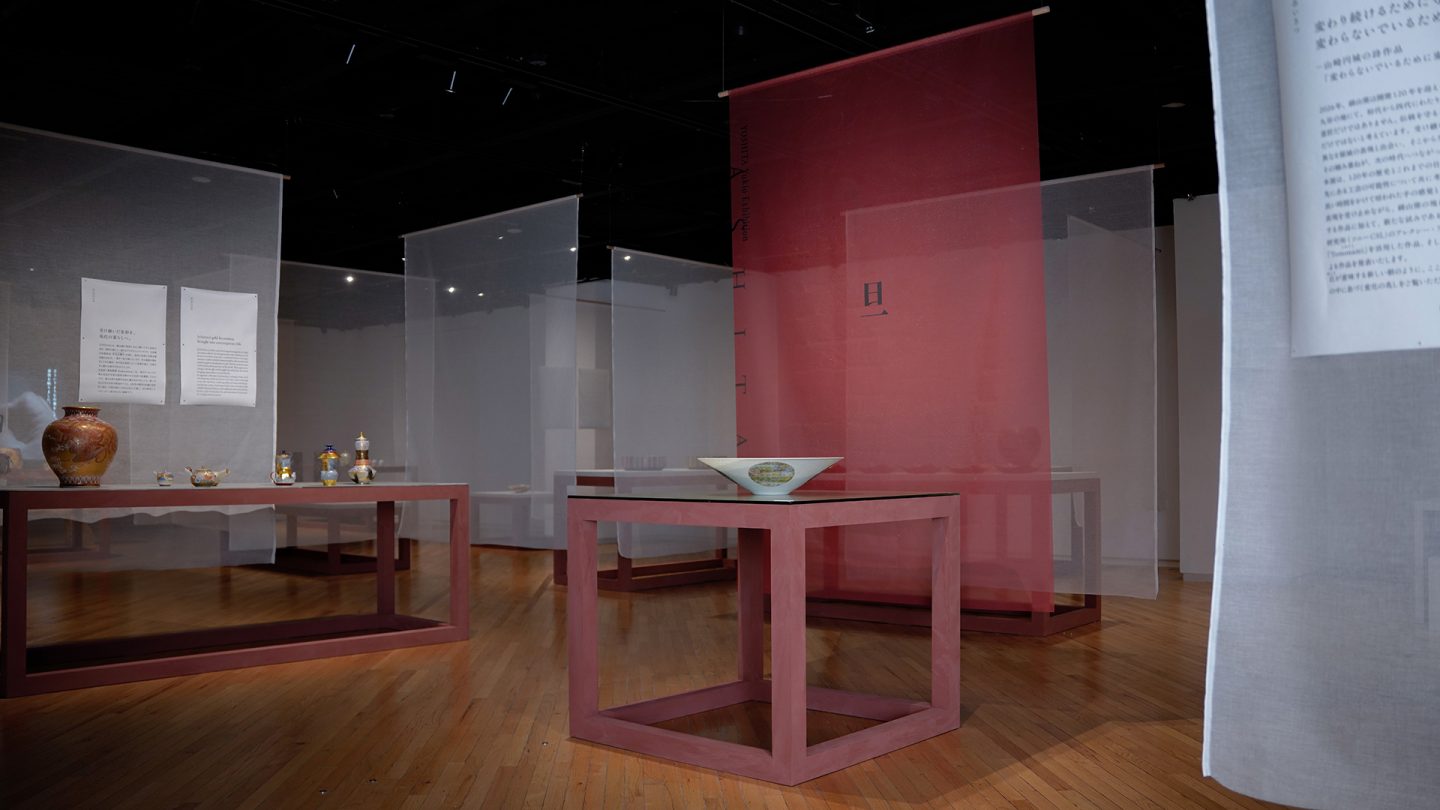
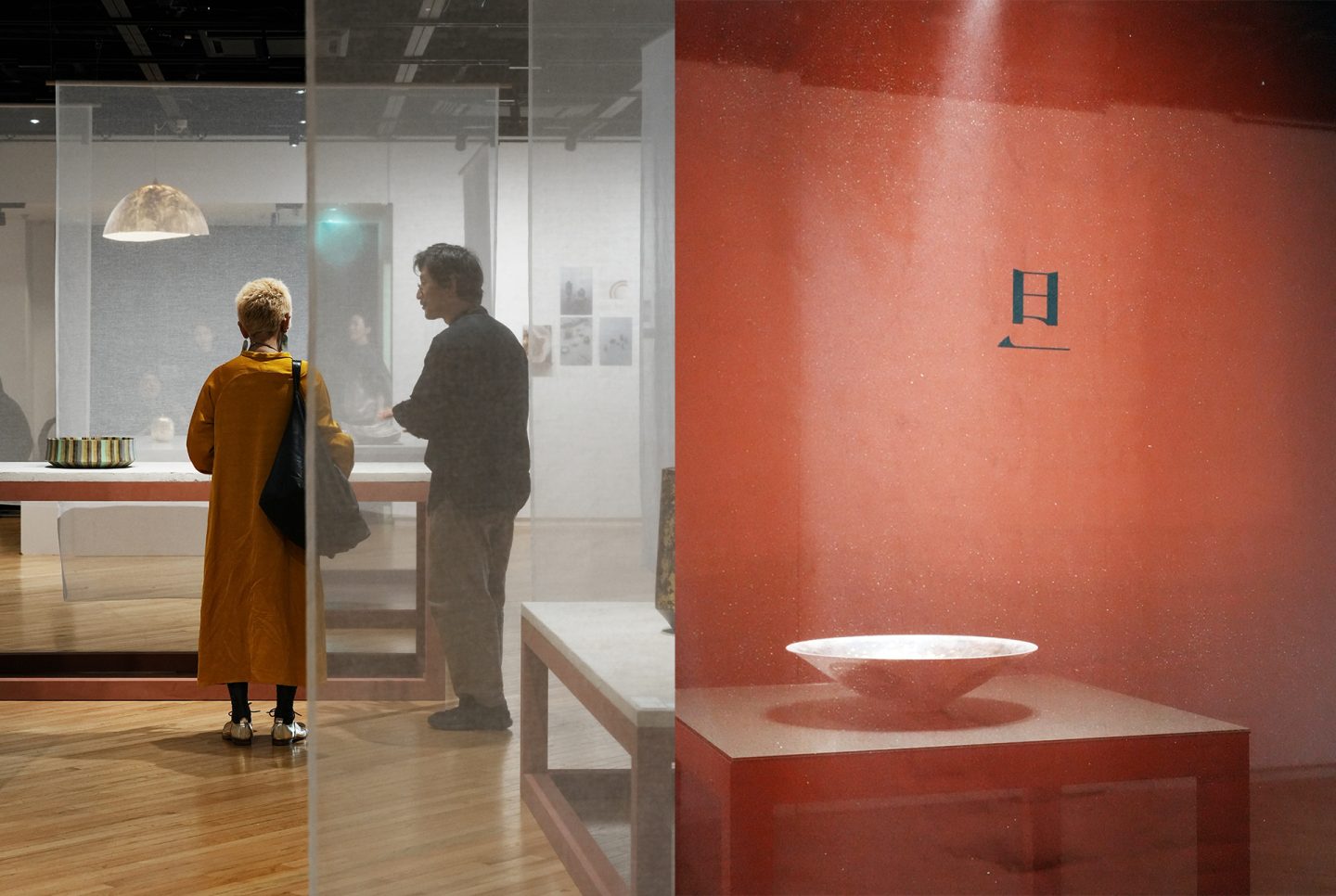
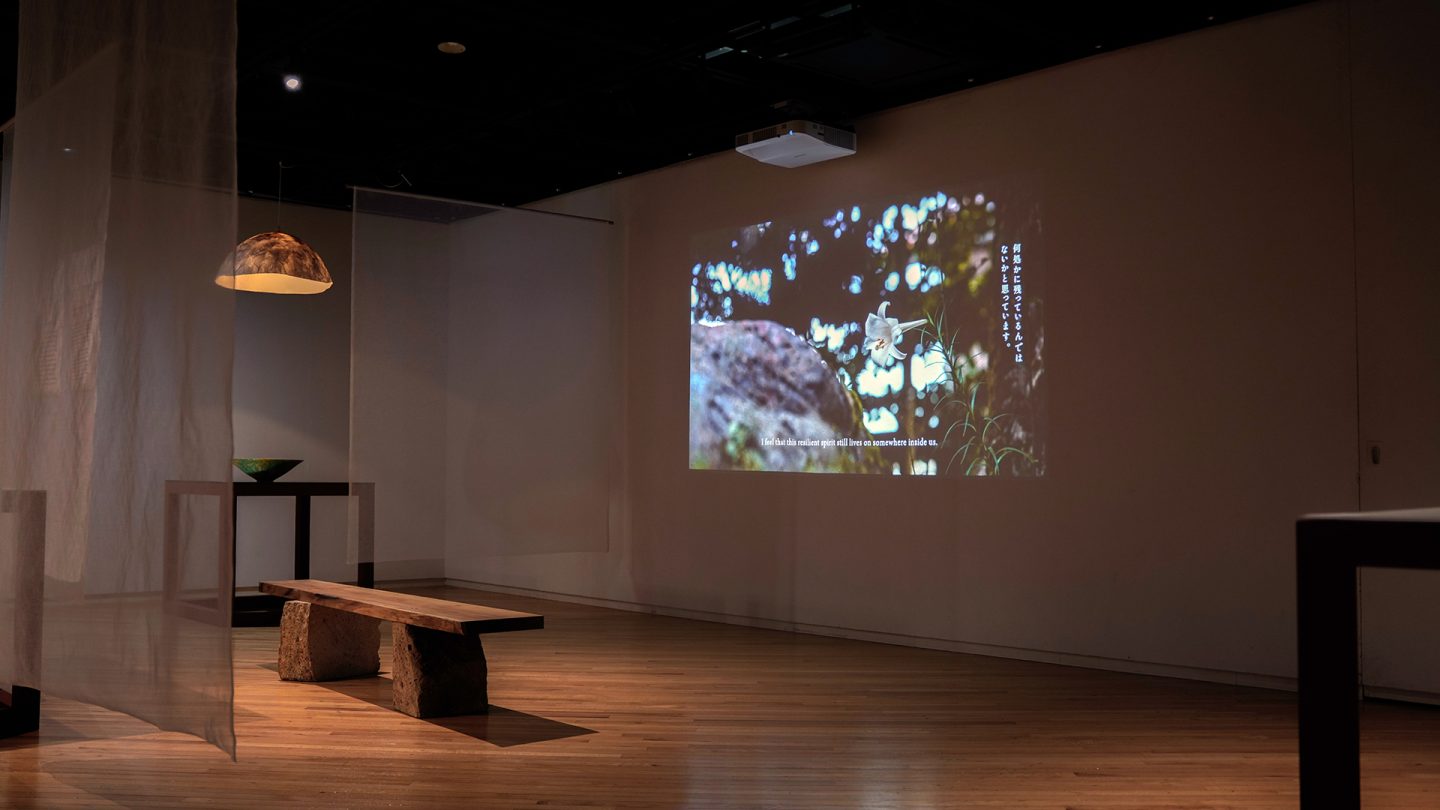
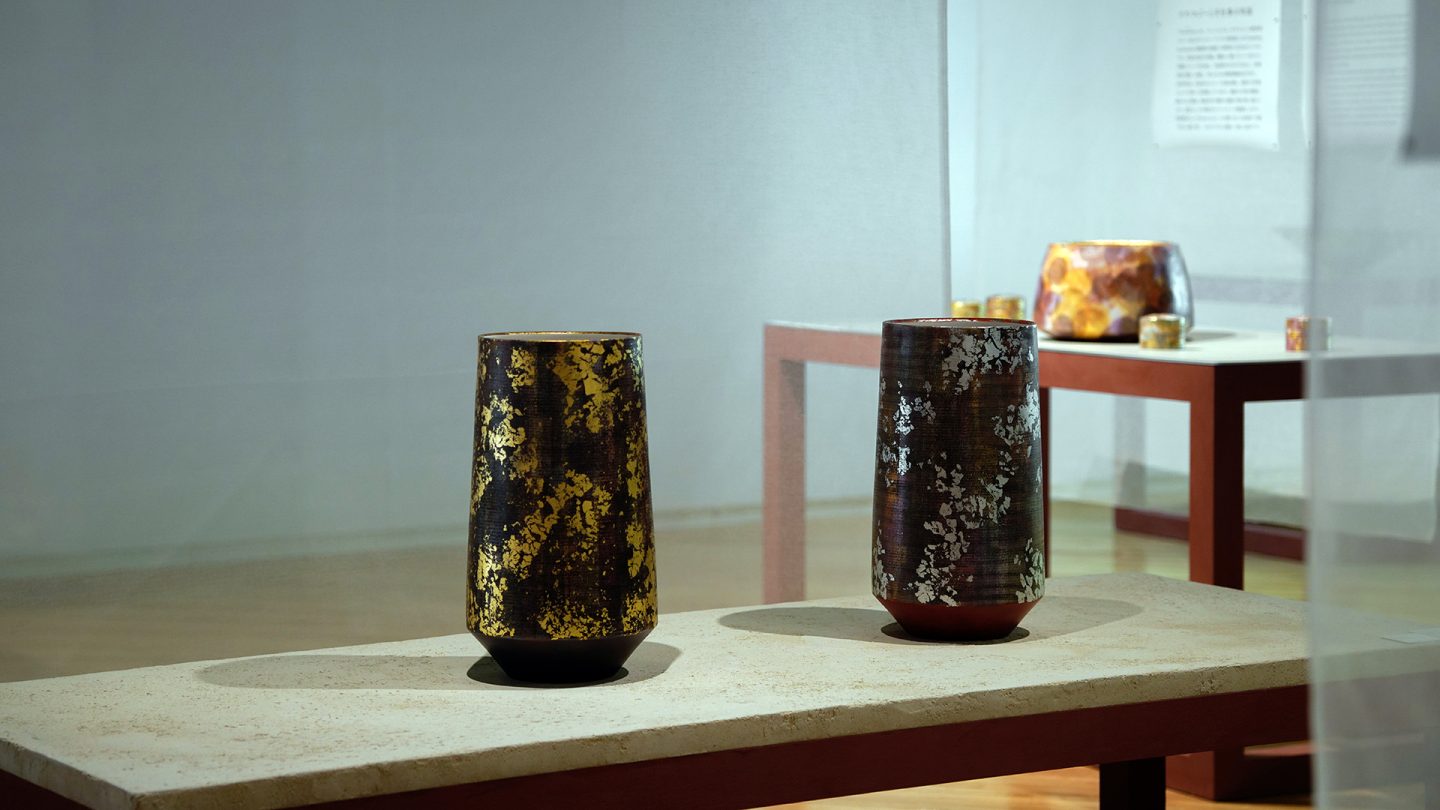
空間はシンプルに蚊帳と赤いフレームの什器を反復させていく構成。蚊帳は古くから日本で作られてきたものであり、今回の120年というキーワードとも通ずるところがある。そして何より素朴ながらも繊細な表情で、作品を際立たせることができる素材。透過した先に次の作品が見える、さらにその向こうの景色も見える、という空間のレイヤーは錦山窯の絵付けで、何度も色を重ねていく、という行為にも重なる。赤い脚の展示台はあえて太くし、特殊塗料で色を5度以上重ねて作られたもの。
The Kinzan Kiln was founded in 1906 in Komatsu City, Ishikawa Prefecture. Specialising in overglaze decoration on Kutani ware, it has been characterised for generations by its use of gold in its designs. Yoshida Minori the third-generation master, perfected the ‘under-glaze gold decoration’ technique—which involves applying patterns using gold leaf and gold powder—and was designated a Holder of Important Intangible Cultural Property (Living National Treasure). The current head of the kiln, Yukio Yoshida, continues to inherit this technique whilst pursuing new forms of gold decoration that incorporate contemporary sensibilities.
The space has been designed with a simple composition, featuring a repetitive arrangement of mosquito nets and red-framed display units. Mosquito nets have been made in Japan since ancient times. Whilst this aligns well with the theme of ‘120 years’, above all, it is a material whose simple yet delicate appearance serves to highlight the works. Furthermore, the layered nature of the space—where the next piece is visible through the fabric, and beyond that yet another—mirrors the act of layering colours in the painting process at the Kinzan Kiln. The display stands with red legs were fashioned from 75mm square timber and created by applying approximately five layers of special paint.
錦山窯の作品のシリーズの一つとして、ソニーコンピュータサイエンス研究所との協業から生まれた「Tomonami」を活用した作品がある。「Tomonami」は、創造性の探索をテクノロジーによって支援するシステムで、アーティスト自身のルールをパラメータとしてソフトウェアに反映し、新たなイメージ生成の可能性を広げるツール。
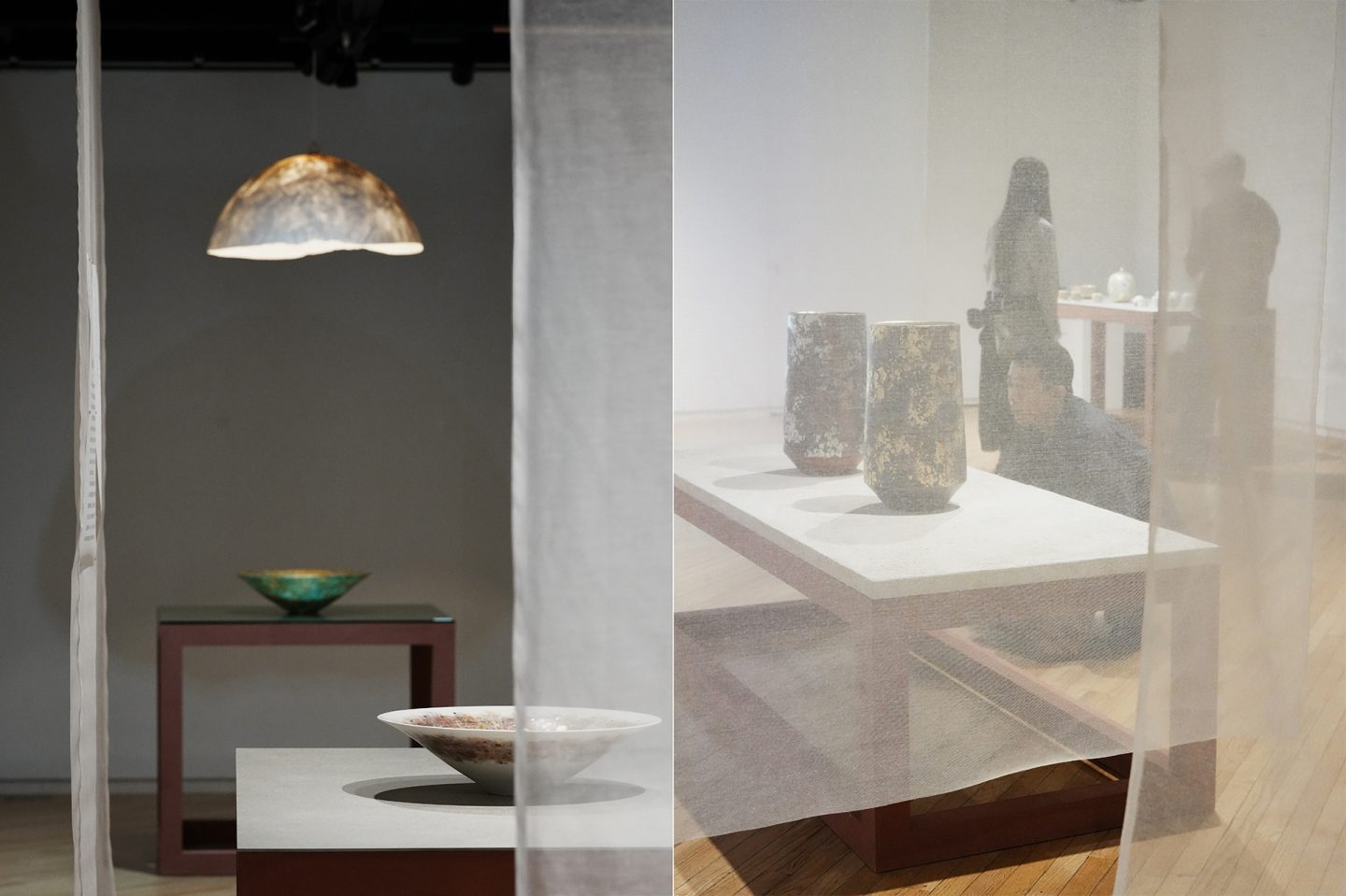
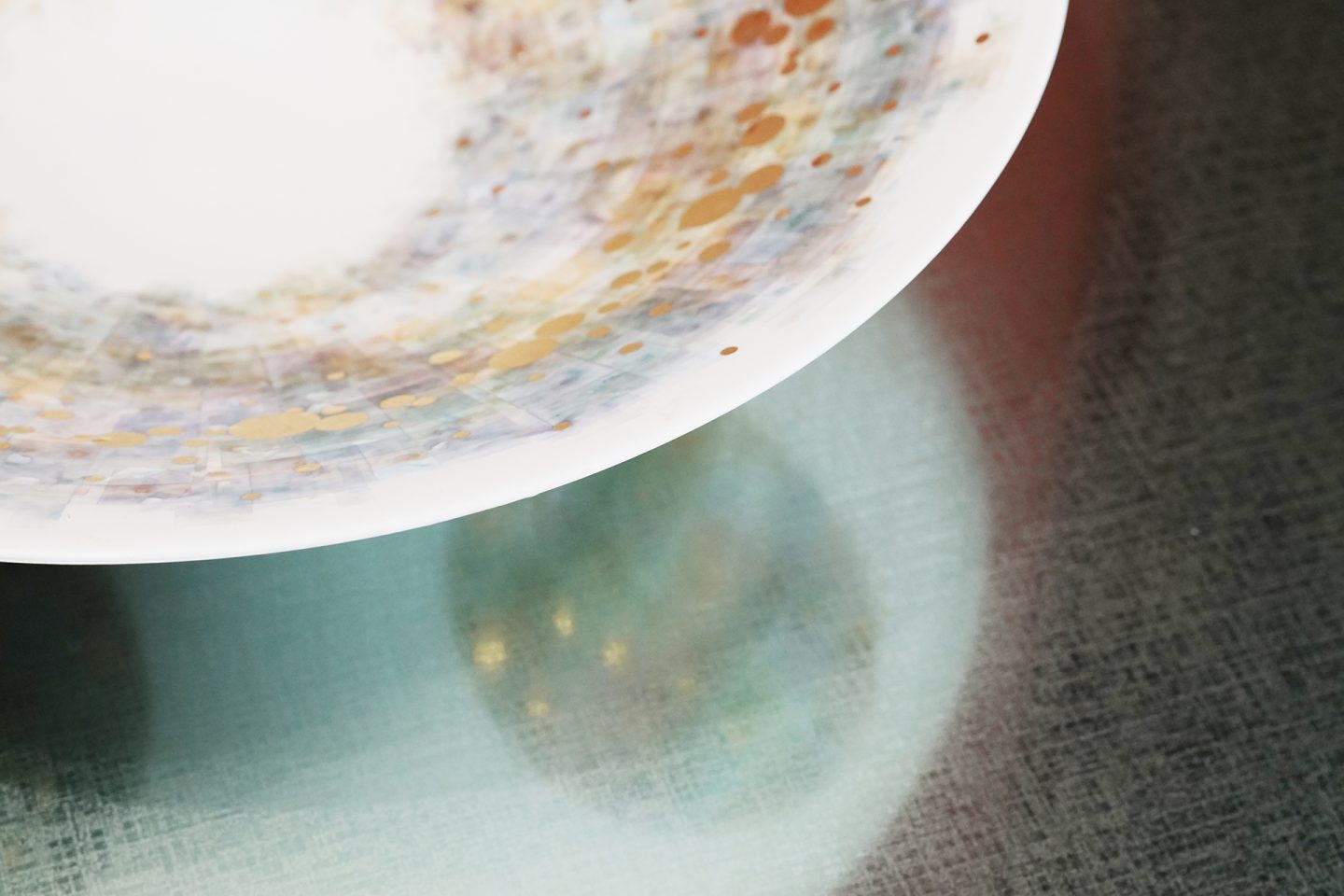
このエリアでは大きく横に広がった大皿などの外側の絵付けの存在を伝えるように、天板は反射する素材を使用している。柔らかくほのかに映り込ませることで、器の外側のストーリーにも着目してもらうことを狙った。
One of the series of works from the Nishikiyama Kiln features pieces utilising ‘Tomonami’, which was developed in collaboration with Sony Computer Science Laboratories. ‘Tomonami’ is a system that uses technology to support the exploration of creativity; it is a tool that incorporates the artist’s own rules as parameters into the software, thereby expanding the possibilities for generating new imagery. The painting is carried out using this technology as a basis. In the area dedicated to this series, a material that softly reflects light has been used for the tabletop, so as to convey the presence of the decoration on the exterior of the vessels, such as large plates. By creating a subtle reflection, the aim is to draw attention to the story told on the exterior of the vessels,
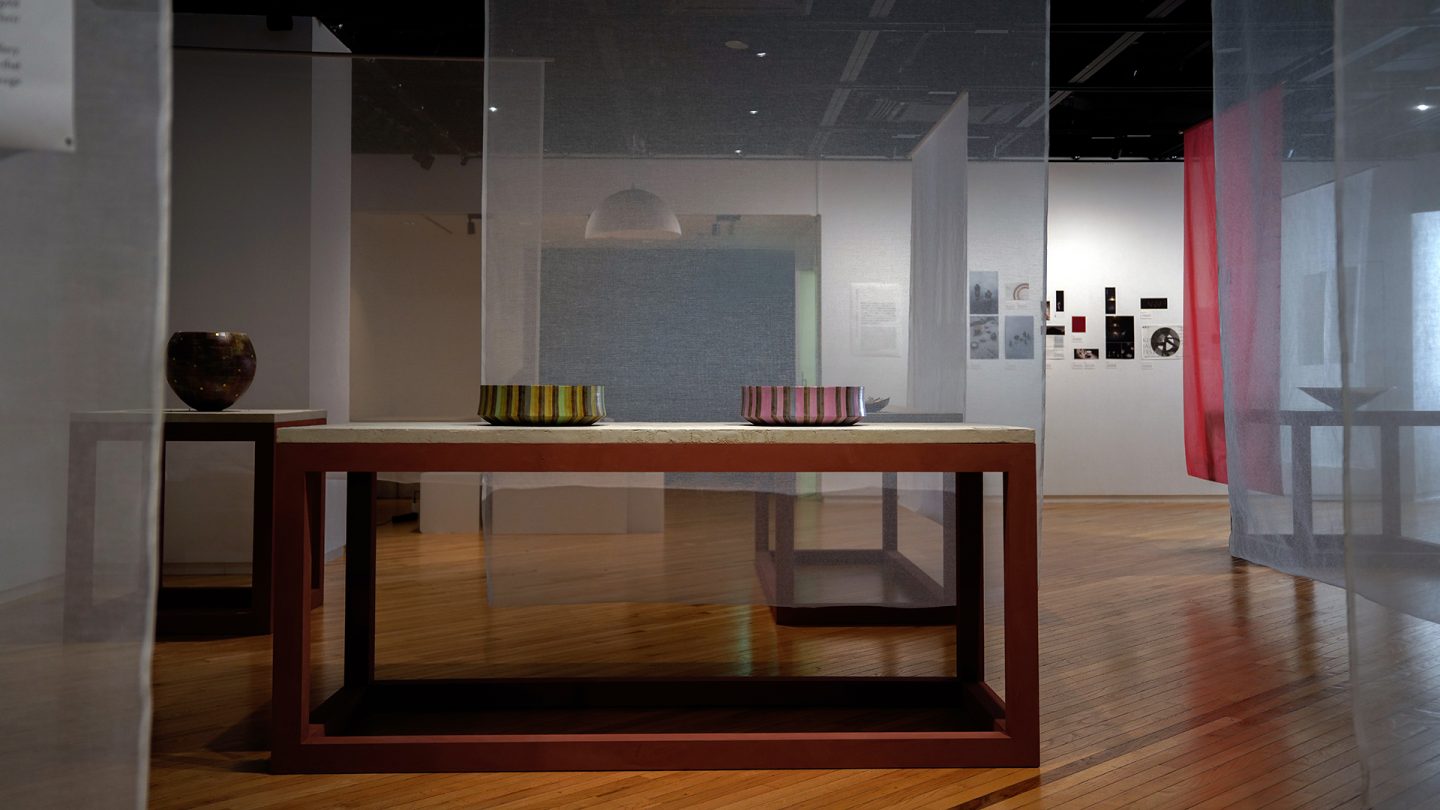
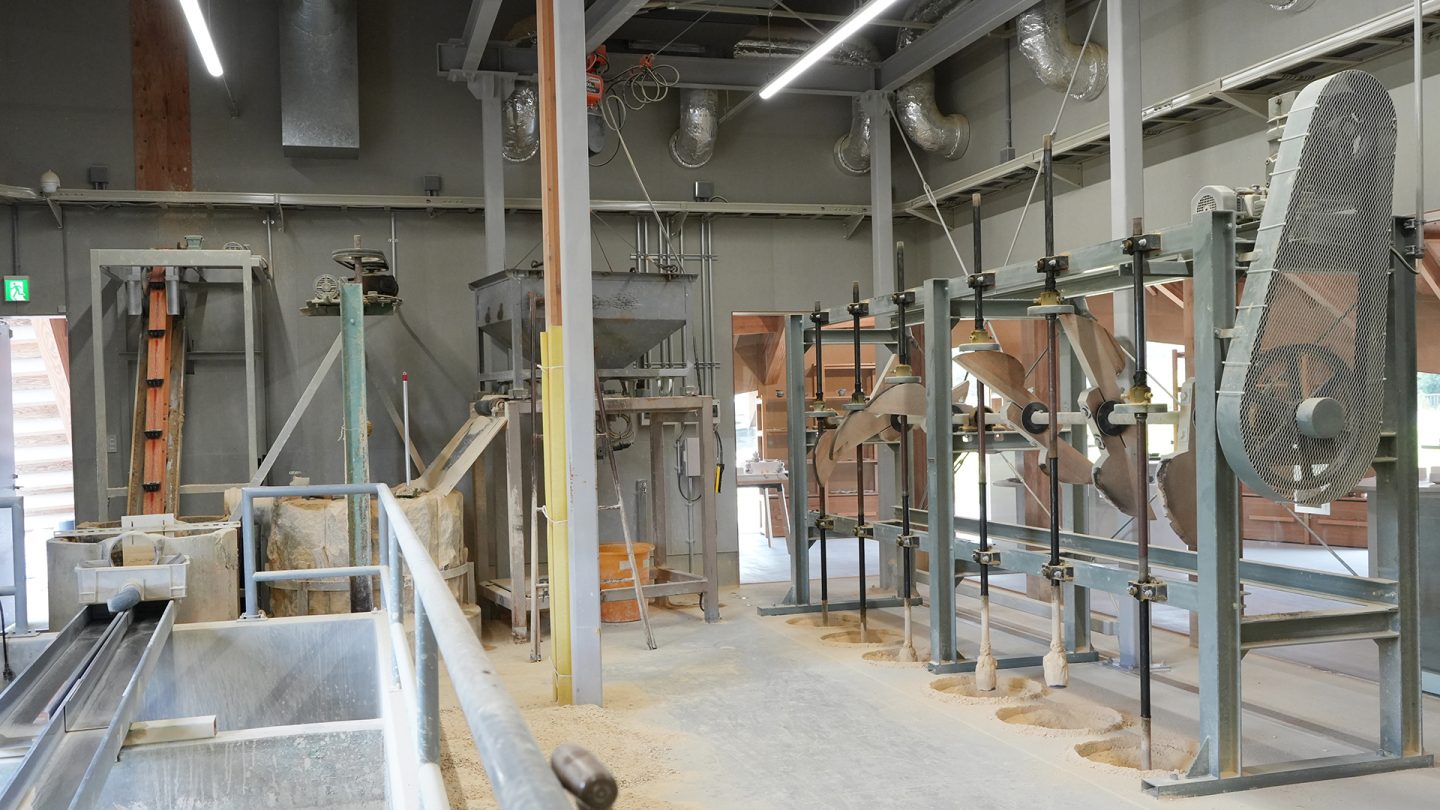
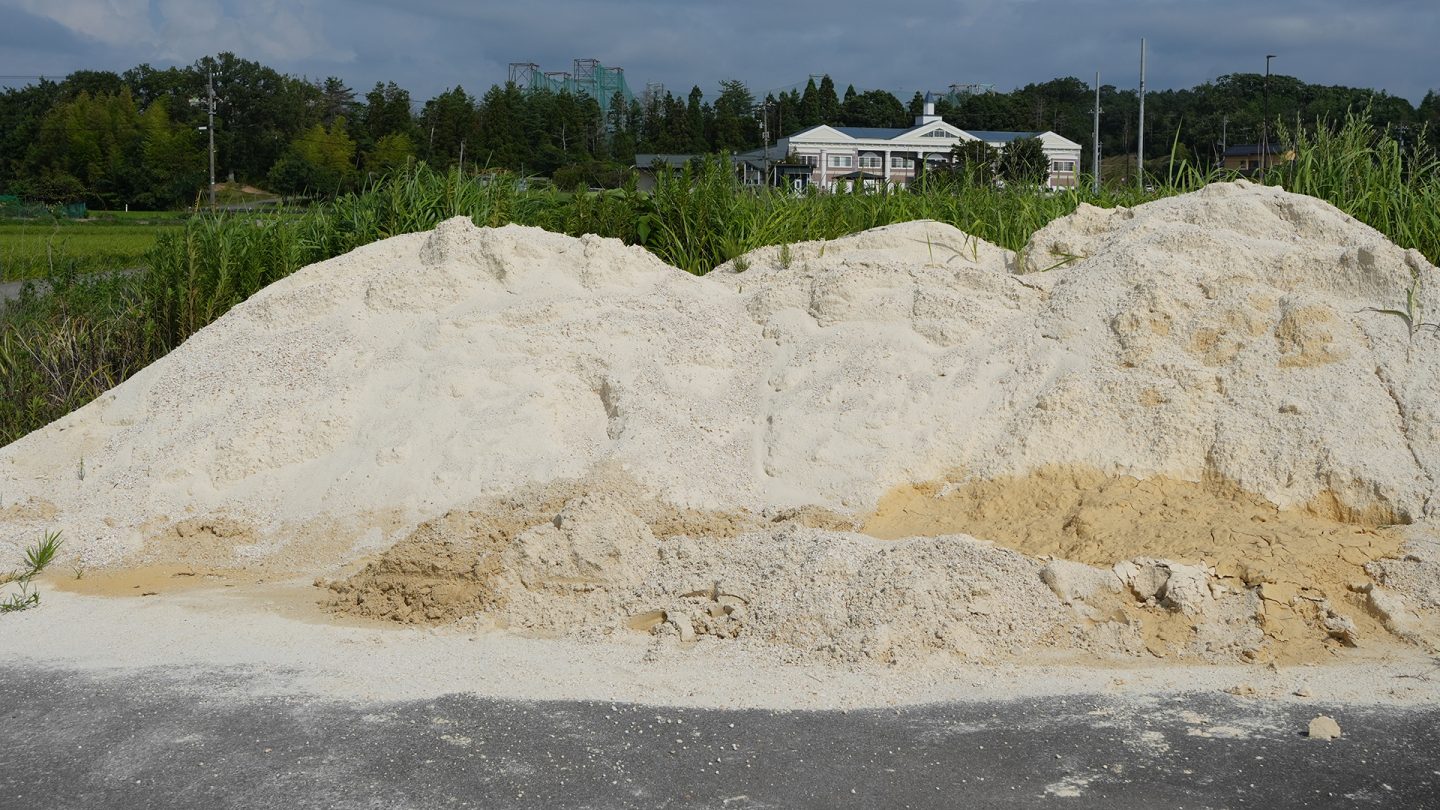
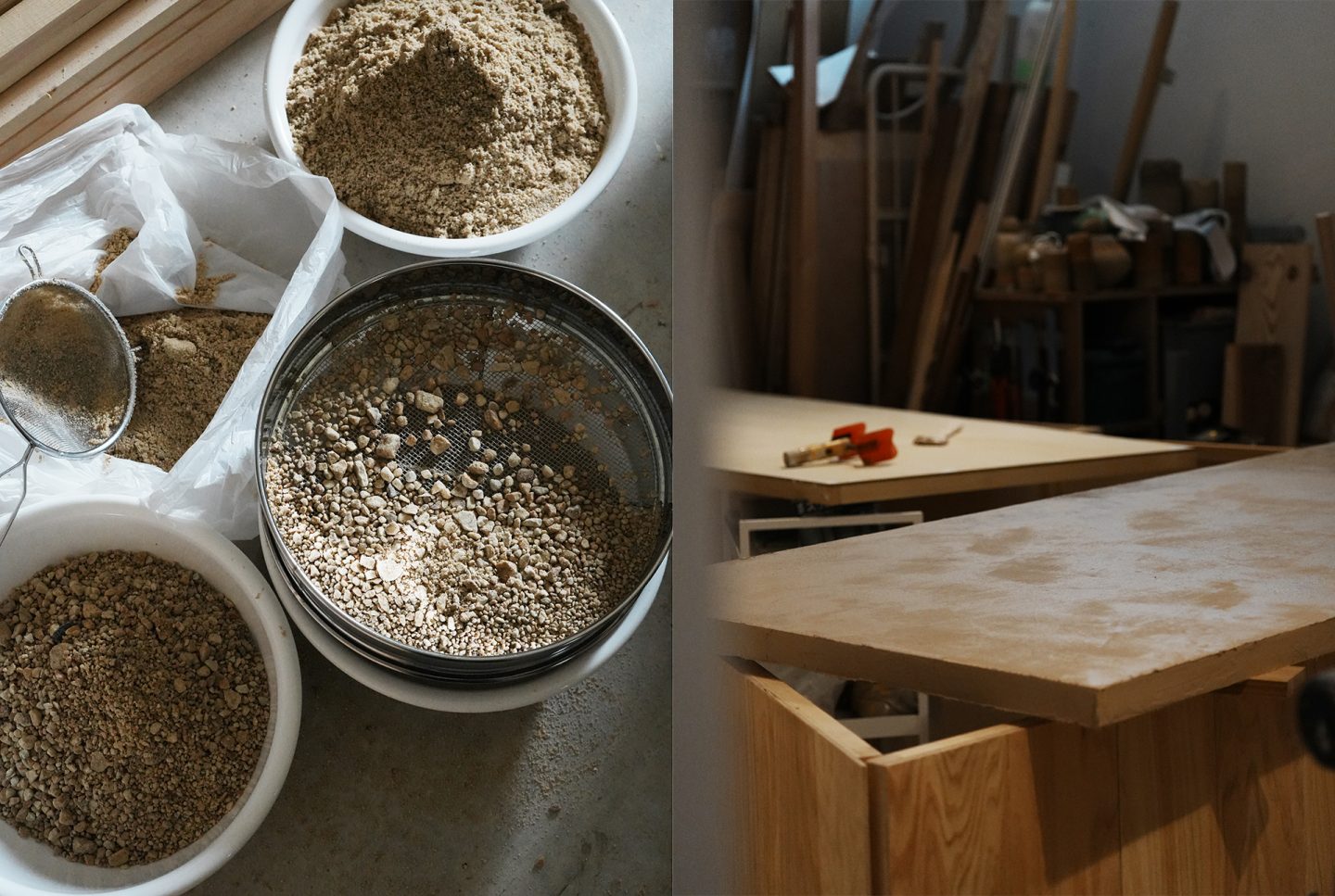
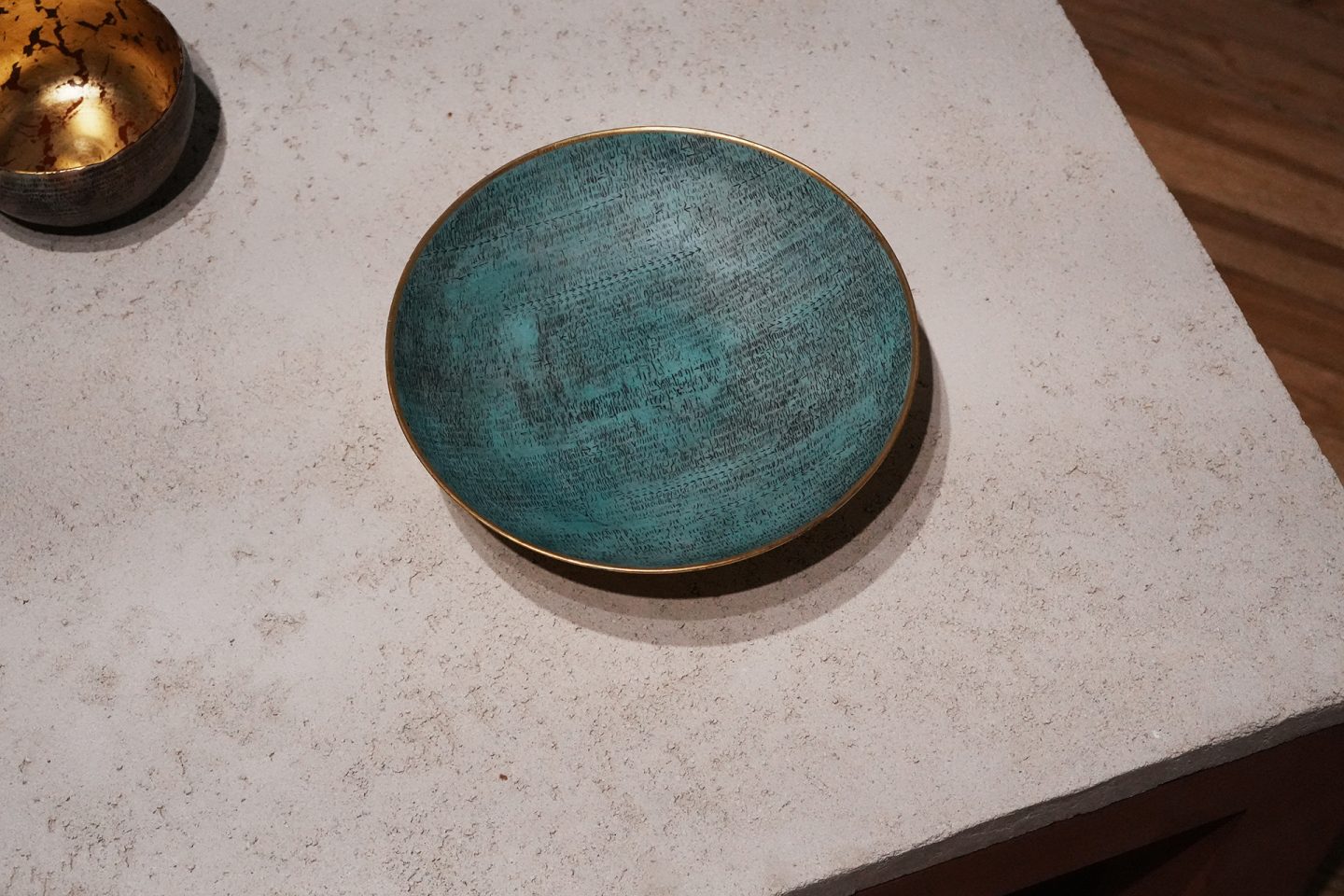
アーティストとのコラボレーション作品のエリアでは、作品を置く展示台天板をオリジナルの左官材で制作。九谷焼の材料となる粘土は、「花坂陶石」から作られるが、製土される際に、少量残渣が発生するということがわかった。その残渣をマテリアルとして活用できないかとアトリエで実験を重ねたところ、なかなかいいのものが出来上がった。表面の素材感が、展示される作品をより一層力強くみせるし、天板と作品の関係性を知ると、さらに感嘆の声が聞こえてきそうである。
In the area dedicated to collaborative works with artists, the tops of the display stands were crafted from an original plaster material. Whilst the clay used for Kutani ware is made from Hanasaka pottery stone, we discovered that a small amount of residue is produced during the clay preparation process. Wondering whether this residue could be utilised as a material, we conducted a series of experiments and succeeded in making it suitable for practical use. The way this material is utilised, along with its textural quality, lends the exhibited works an even greater sense of power.
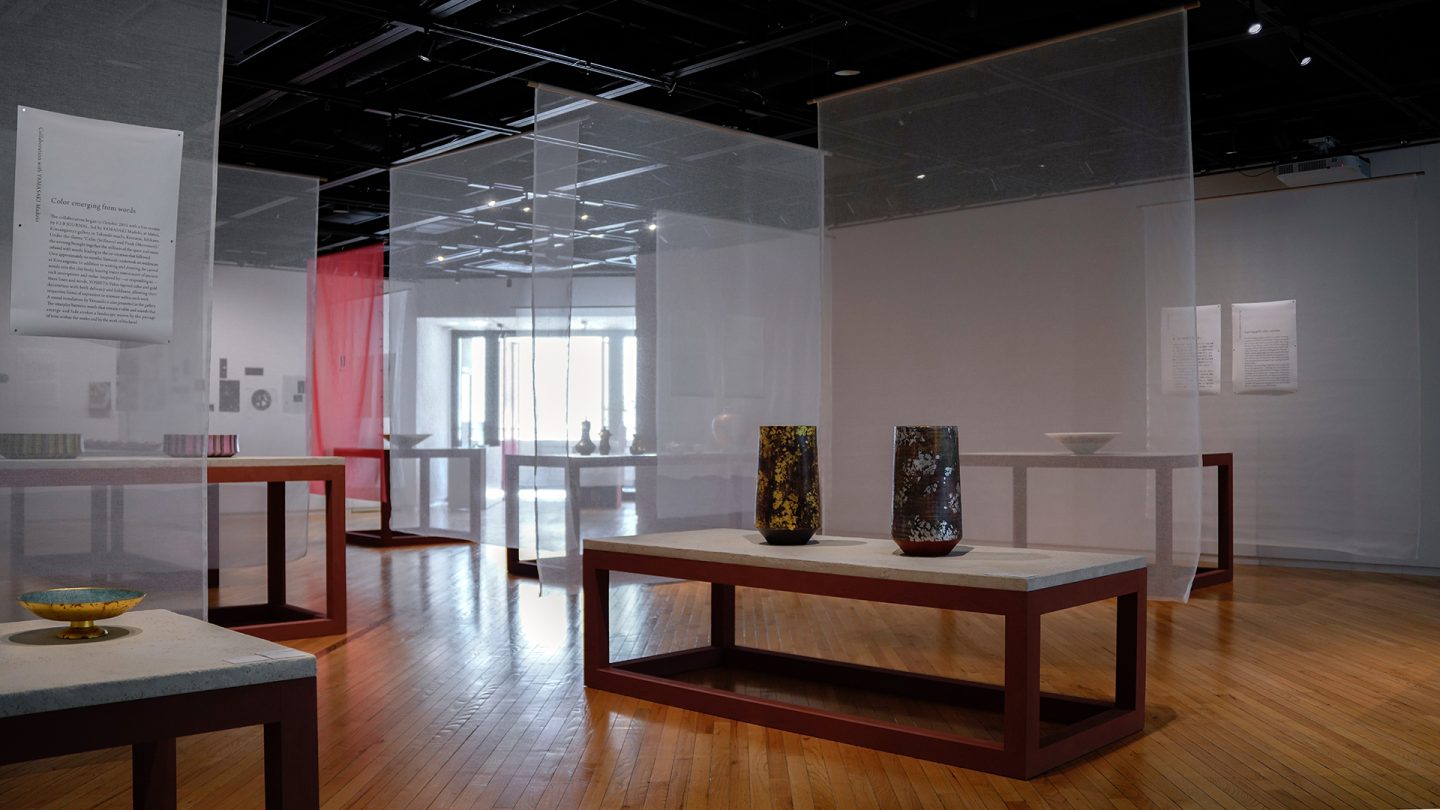
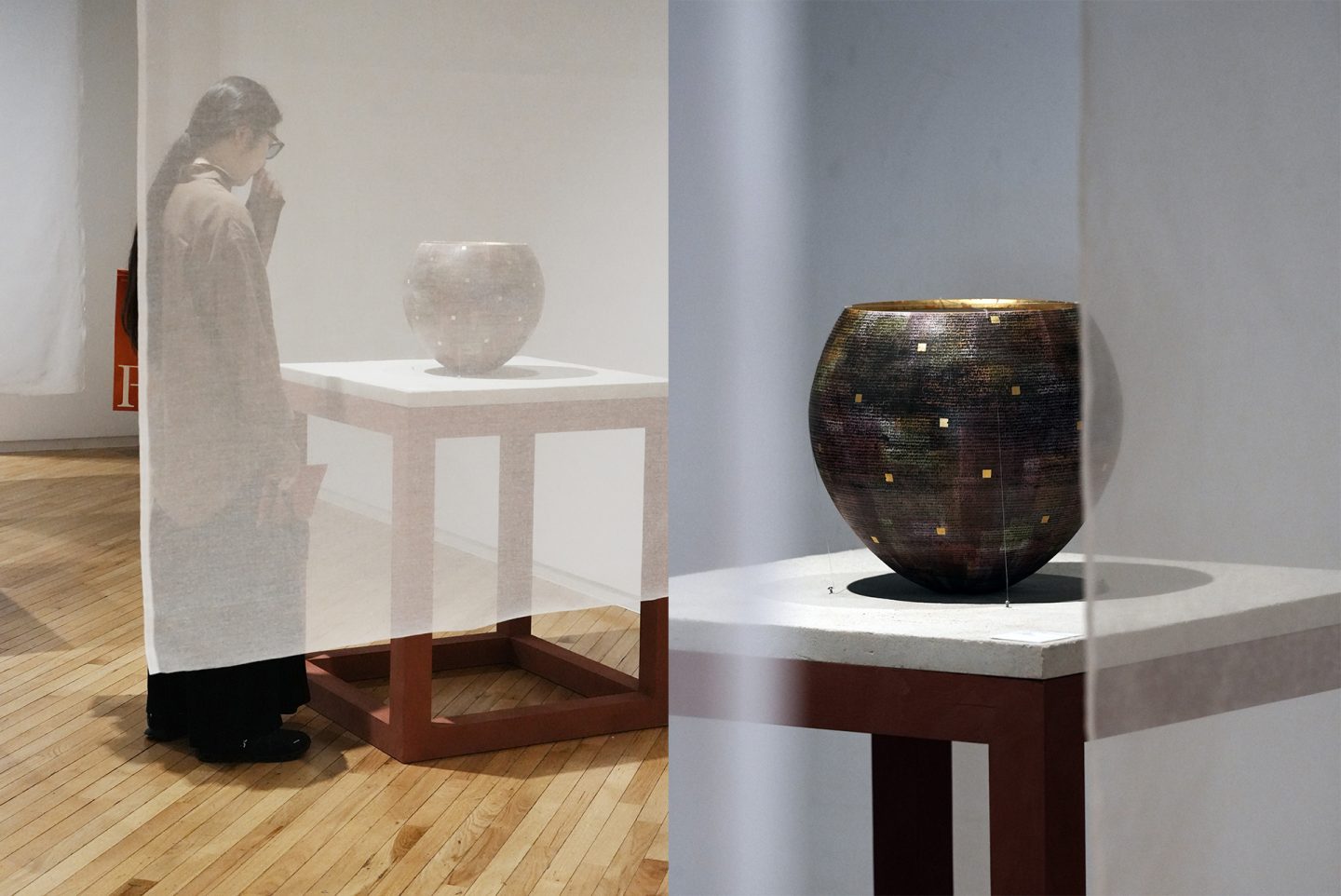
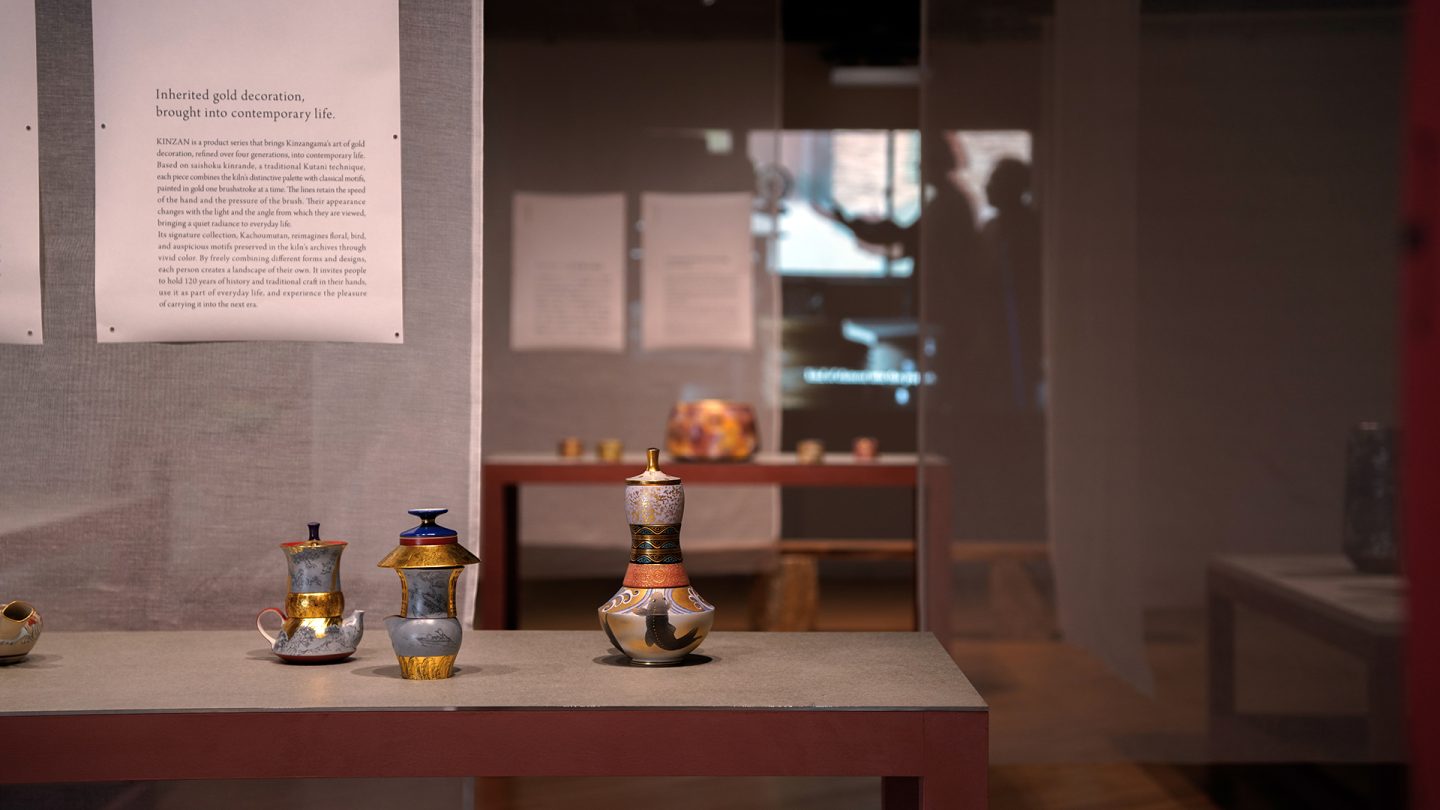
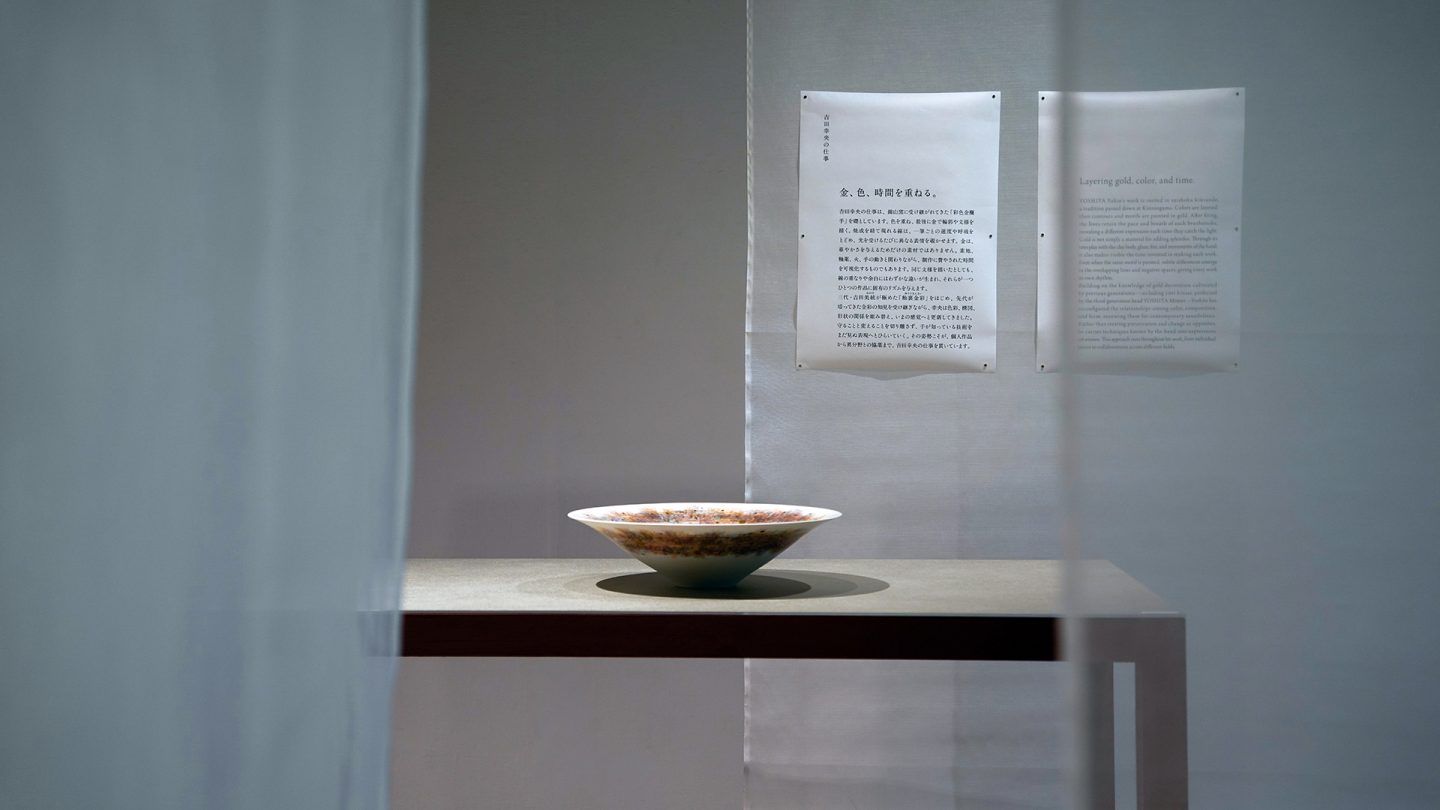
もうお気づきだろう、空間を仕切る蚊帳には、部分的に各カテゴリーごとのエリアキャプションが設置されている。いわゆるな展示会のように、壁を建ててボードにキャプションを貼りましたというステレオタイプな事はしたくなかったので、印刷した和紙をマグネットで蚊帳に取りつける手法とした。そのあっさりとした設えが空間に浮遊感やリラックス感を生み出し、120年という歴史に対する緊張感がほぐれたのかもしれない。
The mosquito nets dividing the space feature area captions for each category. As I did not wish to erect walls and affix captions to boards, as is often done in conventional exhibitions, I opted instead to attach sheets of washi paper—printed with the captions—to the nets using magnets. The result was a sense of lightness and relaxation within the space, which may well have helped to ease the sense of tension associated with the exhibition’s 120-year history.